Showing posts with label hospital roommates. Show all posts

Friday, January 7, 2022

My Blog is 10 Years Old. What it’s Meant, How it’s Going and How I’m Doing

My brother recently sent me a picture of my dad and me, taken in 2011. I am wearing a necklace given by a friend as a semi-gag gift. It’s a little pink computer on a chain, in celebration of the publication of my blog.

I’m not good with dates, and I couldn’t tell you if asked when I started this blog, but I knew I only wore that necklace on one trip and the picture was taken in 2011.

And that is when I realized my blog is 10 years old.

Wow.
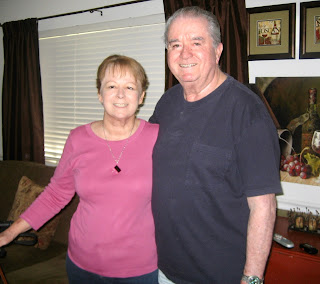

My dad Frank Diamond and me in 2011


When I was going through torturous years fighting my rare non-Hodgkins lymphoma, friends suggested I write about my experiences.  Good idea, I said. But first I have to be able to sit up at the computer without being in horrible pain. I deflected all suggestions about writing while lying in bed or using a dictation program to compose. My three decades in journalism taught me to create while I type sitting up and I simply couldn’t break the habit.

So I took an online class on how to start a blog. Ha! my-tech-friendly kids said. You do not have to take a class to publish a blog. Well, I did. 

Our instructor made us sign up for Facebook and Twitter,  which I had been reluctant to do. She helped us customize our websites and focus on our missions. We had several writing assignments a week and we improved though feedback. So when we were ready to publish, we had several posts ready to share.

After six years of living my new disabled life, I had plenty of material. I had spent nearly five months straight in a hospital bed, finished a 15-month regimen of intense chemotherapy (enough, my doctor said, to kill an elephant), faced temporary paralysis and the inability to speak. I had lived with excruciating pain due to multiple compression fractures and dealt with steroid-caused osteoporosis and cataracts. I was released from the hospital and began intense home physical therapy to regain my ability to walk. Then the cancer came back a year later. In this round, I faced a terrifying bone marrow transplant, total body irradiation and chemotherapy that was seven times stronger than what I endured before. 

I began another slow journey of recovery.

I had enough experiences and opinions to fill a book.

Instead, I wrote my blog. Fifty-six posts in the last decade: 23 the first year, 14 the next and two or three in the subsequent years. In 2019 and 2020, I only published one. Last year, although I had two topics in my head for months, I didn’t write one. I was spurred on to compose recently after realizing theviewfromthehandicappedspace had turned 10 years old.

My excuse for not publishing more? I’ve been living my life.

Going to an exercise class twice a week, reading books, going to movies, celebrating happy occasions, mourning bad news. Meeting up with friends and family. Hugging and virtual hugging a lot. Attending book club meetings, going out to breakfasts, lunches and dinners and occasionally brunches or happy hours. Going on vacations, attending plays and concerts. Taking every opportunity to toast at every occasion, sometimes multiple times at a sitting. I am mindful of celebrating that I am still here with others whom I love.

I’ve also been busy seeing endless doctors, dentists, oral surgeons, physical therapists, acupuncturists and specialists I had never heard of. Test after test and appointment after appointment. 

After a decade, I’ve reached a point in my life where I think I am physically as good as I’m going to get. There has been a change for the worse in my ability to walk and balance. The neuropathy in my legs has intensified and I am weaker and more imbalanced than I have been in years.

While doctors order tests to find out if there is a medical reason for this and I attend regular physical therapy appointments, I am getting by doing all the things I used to do, but with rides and assistance from dear family and friends.

But I still plan on sharing through my blog. I know it has helped a lot of people already. 

In 2011, I chose the title for my blog and I wrote its purpose: For people who find themselves in lives they hadn't anticipated: seriously ill, disabled or caring for someone who is. I wrote a paragraph about the blog and I wrote a backstory, giving a short summary of how cancer had upended (and almost ended) my life. I wrote about everything I experienced. I criticized the layout of disabled bathrooms, lamented the poor choices of walkers and raged at rude able-bodied folks who park illegally in disabled parking spaces or rush by me to occupy the only handicapped stall in a public restroom. I talked about staying in one of the worst nursing homes and putting up with nutty (and possibly dangerous) hospital roommates. I lashed out at a concert ticketing system that is not friendly to disabled people.

I also celebrated the good things I have found over the years: the kindness of strangers, the establishments that have gone out of their way to assure accessibility, the comfort provided by my stuffed bunny and the joy of graduating to a real bed after more than a d0zen years in a hospital bed in my family room. I basked in the support of my family and friends, particularly at an amazing surprise fifth stem cell  transplant birthday party.

My most popular post by far was the one about disabled parking. I heard from lots of people in many states and a few other countries struggling to understand the rules. Some wanted to fight a parking ticket when they forgot to put up the disabled placard in a car, some wanted to know if their placard would be recognized in other states or countries (generally, it is), others sought to understand the requirements where they lived. And some wanted to rant against the lowlifes who park in the disabled spots with fake or improperly used placards.

While I don’t preach about my experiences with cancer or my blog, I am quick to offer support when I hear of someone with a new diagnosis or preparing for a bone marrow transplant.  I’ll email my go-to blog posts: one about hearing the initial news and the other a summary of important things I learned. I offer any other help they need. 

Dreading chemotherapy-induced hair loss? I’ll send the post I wrote about the hairy truth.

Facing a bone marrow transplant? I’ll send my post about that and will counsel  you by phone, as some have requested.

Many people have expressed gratitude for this advice. And two bone marrow transplant recipients have personally thanked me (via phone calls) for helping them through the process. One person had his wife call me from his hospital bedside to ask the name of the drug I had recommended to ask for if the nausea got too bad. (It was intravenous Ativan.)

All is not easy in my life these days. I have a compromised immune system so keeping safe through COVID-19 is vital to me. Also, my recent spills have been particularly troubling. I had three serious falls within a five-month period in 2021. (I’ve had more than a dozen since getting sick, but these were extra concerning due to their frequency.) Two required visits to urgent care to make sure I hadn’t  damaged my bones or brain when I slammed my head against a door one time and the asphalt the last.  I did not, meaning my Prolia is helping with my osteoporosis and my head is pretty hard.

I believe I’ve accomplished what I intended when I first started the blog: to make folks more aware of what living in a disabled world is really like and providing a glimpse into the inequities I and others face on a regular basis. I am ever grateful that I survived and beyond touched by the support of my family and friends. I am thrilled when I hear from friends whose eyes have been opened to the needs of the disabled: someone who teaches her children it’s not OK to use the handicapped stall, another who tells me how I would love a particular place because it is very accessible, and one who visited a restaurant ahead of time before we went to lunch there to investigate the layout and the ladies room. Another friend, when deciding on an office for her psychology practice in an historic building, made sure there was an accessible room for disabled patients to use. She was asked did she have any disabled clients? No, she replied, but I might. And others who rented offices in the same building might. The same friend made her remodeled bathroom accessible for when I come to visit.  Still another added a grab bar in the shower for when I am a guest. Others bought a portable ramp I can use when stepping into their home.

After I found myself in tears hearing the Tom Petty song “I Won’t Back Down” the first time I slowly navigated a Relay for Life survivors’ lap, I adopted it as my theme song for life. “You can stand me up at the gates of hell”- I might be leaning against a wall and desperately clinging to my walker - “but I won’t back down.”

My New Year’s resolution? To keep living my life and writing a blog post or two.

Happy 2022.


Thursday, July 23, 2020

Toenail Joy is Essential in Sickness or Pandemic


A few weeks ago, before salons were shut back down again due to COVID-19, I got a pedicure for the first time in months. Because I almost always wear closed-toe shoes, very few people get to see my neatly-trimmed peachy-pink toenails.

But I do.  

And they make me happy.

I learned the importance of toenail joy during my grueling three-year battle with cancer.

At times, I had multiple lines coming out of my body and tubes in my nose and mouth. At one point, my arms were swollen and the color of eggplant. My hands had to be restrained so I wouldn't pull out my tubes. After a brain biopsy, the quarter of my head that was shaved sported a nasty scar. Paralyzed from the waist down, I couldn’t control my feet, even to hold them upright as I lay in bed. Machines massaged my legs to prevent blood clots and my feet were attached to braces to keep them in place and prevent them from flopping to the sides.

But through it all, my toenails looked fabulous.

That made me happy.

My friend Mary came up with the idea, bringing a portable pedicure kit with her from Northern California to my hospital bedside. I remember worrying for a second that the strong nail polish aroma would annoy my roommate. (But it was only for a second, because she had been complicit in smuggling in several kittens into our room, so she had already tested the hospital roommate etiquette limits.)

Months later on a return trip to a different hospital, Mary gave me another pedicure. Because I was in a hospital bed at various facilities for four-and-a-half months unable to walk, my frame of vision was limited. I couldn’t see or do much, but I could see my toes. If they had resembled toenails a la Howard Hughes, it would have depressed me more than I already was. After months in the hospital, I learned health aides will help you with a lot, but pedicures was not on their list of services.

My peachy-pink toenails today
When I was released from the hospital to my home, I had a home nurse who was a godsend. Skilled, trustworthy and kind, she would help me with all sorts of things. When I learned she could transfer me into my wheelchair and help me into the car to take me to my doctor’s appointments, I had another idea.

Sure enough, she was able to take me to my local nail salon for periodic pedicures. I couldn’t get in the spa chairs which are part of the luxury package. I sat in my wheelchair and put my feet in a tub of water. It seemed luxurious to me.


For about a year after being released from that lengthy hospital stay, I had to return one week a month for more intensive chemotherapy. One time, a female doctor came in to check on me. She chatted with me, listened to my heart and lungs and checked my extremities. When she got to my feet, she said, “Nice color.” 

“Thanks,” I said proudly. “I always like a peachy-pink or coral.”

She looked confused.

“I was talking about the color of your feet. It shows that your circulation is good.”

I guess that was good news.

Three years after my non-Hodgkins lymphoma diagnosis, my cancer returned. I needed a bone marrow transplant.

 Ugh.

I could finally walk (with a walker), my hair had grown back and I was getting back to my new normal life when I got this news. I knew nothing about transplants and didn't know anyone who had ever had one. I learned it would entail stronger chemotherapy sessions (seven times the amount I had before), total body irradiation and a month in the hospital feeling the sickest I had ever felt.

I was given a thick booklet to explain the lengthy carefully-orchestrated process.  And I was assigned a transplant coordinator nurse to answer all my questions. 

I dutifully read through all the information. I was nervous about all of it, including the description of the hospital stay, the restricted diet while in and out of the hospital and a no -contact-with-pets rule. But if it meant saving my life (and it did), it was necessary. But there was one requirement that annoyed me.

Nail polish was prohibited. 

When my transplant coordinator called on the phone to answer any questions I might have, I asked her about the nail polish rule. Even on toes? 

Yes, she explained. Doctors could tell a lot about your health by looking at your nails.

What about clear nail polish? I asked.

Well, she said. That would be OK.

So during my transplant, I lost every hair on my body, I had excruciating mouth sores that made it nearly impossible to eat and I had an allergic reaction to an intravenous antibiotic that created itchy red welts all over my swollen face and body (my Jabba the Hutt phase). I was too weak to read or focus on a TV show. I threw up many, many times, and I became crazed and hallucinatory after frantically pushing the button of my self-administered morphine pump. 

But my toenails looked fabulous.

And that made me happy.

Also, the transplant -- almost 12 years ago -- saved my life.

That makes me very happy.


Monday, August 25, 2014

Being Seriously Ill is Embarrassing. Get Over It.


When I entered the emergency room by ambulance, neither one of my legs was working. It was the tipping point after months of sickness and intermittent loss of neurological functions. Doctors were desperately trying to figure out what was wrong with me.

As I lay on the gurney in the hallway, I spoke quietly to the nurse, trying not to let my husband or others nearby hear.

“I think I’m going to need a catheter,” I told her in a tiny voice.

It was embarrassing. I didn’t need to use the bathroom just then, but I wanted to let her know I wouldn’t be able to go by myself. I just wanted to be prepared.

Three months later, I was in a different hospital. Same disabilities. Two people were trying to get a good look near the end of my bed as one of them demonstrated how to insert a catheter.

Into me. 

So much for embarrassment. 

Months and months in hospitals and rehabilitation facilities have taught me this: If you get seriously ill, you can kiss your privacy and humility goodbye. Embarrassing moments are as frequent as visits from the nurse who comes around to take your vitals.

Somewhat shy or prudish? Get over it. Immediately. Get ready to be humiliated. What’s important is your health, not cringe-worthy moments that come with fighting for it. 

My baptism into this awkward world came when I was admitted to the hospital from the emergency room and had to summon a nurse. Nowadays you can’t just push a button and expect someone to come to your room. You have to specify what you need so the nursing station can send the appropriate responder. They don’t want to send you an R.N. if you merely want your water pitcher refilled. That task goes to an aide lower on the hospital staff totem pole. It makes sense, but it doesn’t make it easy.

I remember pushing the call button,using a shy, weak voice when a nurse replied over the loudspeaker and asked what I needed. “A bedpan,” I said. 

“What?” she said. “I can’t hear you.”


“A bedpan.” I said a little louder. I think the nurse asked me to again repeat it.

“A BEDPAN” I hollered with all my diminished strength, loud enough for the nurse, my roommate and any visitors to hear me clearly. 

The worst part of this routine was not only did I have to repeat it every time I needed a bedpan, but when I needed someone to retrieve the bedpan. Or change my diaper. I had to say it as LOUDLY and CLEARLY as I could, so everyone within range of my voice would know exactly what I needed.

Ugghh.

Let me explain that I grew up not discussing bathroom habits. It’s not that we were prudes, we were just courteous. Nowadays, people say “I gotta pee” or “I need to take a leak” or worse with regularity. I just didn’t. 

But in the hospital things are different. Living with roommate after roommate, I learned that nothing was sacred. Bodily functions and complaints, test results, family disputes, medical issues -- things that you would want to keep private -- were spoken for all to hear. And that was mild on the scale of humiliating occurrences and discussions. 

During nearly a year-and-a-half of chemotherapy for my lymphoma, I spent a week in the hospital per month. My release day was not always the same. It depended on blood levels: I couldn’t leave until rescue drugs had flushed the toxic chemicals out of my system. Luckily my husband was nearly always available to pick me up upon discharge. One week he was not. A friend came to help me. 

It was tedious, complicated and embarrassing. It’s not like when I had babies and was wheeled to the curb in a wheelchair, beaming proudly, carrying a newborn (or two), flowers and balloons. In these discharges, I still needed a wheelchair, but the rainbows and unicorns were gone.

I warned my friend when she entered my room: This is going to involve nudity, public urination and a diaper.

Thankfully, she was OK with it. She didn’t really have a choice. They wouldn’t let me leave the hospital until -- after a week of catheterization -- I could prove that I could void my bladder myself.  And because I could barely walk, I needed a bedside commode, which is not exactly private. Then I would act like a proud potty-training toddler and prove to the nurse that I was successful. Off came the gown I’d been wearing for a week (with help), on came the clothes (with help), including a diaper to ease my anxiety as we navigated LA traffic on the way home. (I’d been pumped full of a large amount of fluid for a solid week.)

I learned not to be embarrassed when asking for help or making requests, no matter how bossy or unpleasant it seemed. I asked visiting family and friends to sanitize their hands, even if they had already done so, or leave, if I wanted to be left alone. I casually referred to my “pee bag” when a visitor needed to carry it or hook it onto a pole so I could leave my bed. I directed a relative to please regularly suction the spit out of my mouth while I was hospitalized for my bone marrow transplant. The sores in my mouth (a frequent side effect of any stem cell transplant) made it excruciatingly painful for me to swallow even normal saliva.

I was sitting bare-assed on my bedside commode one time when a doctor came in to visit, pulling back the privacy curtain to have a chat with me. Stunned, I answered his questions as if I wasn’t sitting on a toilet. 

The nurse later chastised me for allowing him to speak to me in such a private setting. But the physician, who had some nickname like Dr. Bee because he flitted quickly from room to room, only made his visits once a day and I didn’t want to miss him. My family and I desperately needed updated information and questions answered as often as we could get it.

The humiliation continued after I was released from the hospital and in recovery at home. Some incidents are too horribly embarrassing to even say out loud (or write). 

My shyness at home eased up. When I was first released after four-and-a-half months in a hospital bed, I was unable to walk. Paraplegic for a while, my nerves and muscles were beginning to function as massive amounts of chemotherapy began to destroy the cancer cells in my brain. I was at home, but I still required a lot of care. I had to be lifted out of my at-home hospital bed and onto a bedside commode to relieve myself, summoning a home nurse or a family member when needed.

This was in the middle of the family room, mind you, so if an engrossing TV show was on, too bad. I made everyone leave the room while I sat on the pot. Slowly, I began to ease up on my rules.  After a while, I would let my nurse stay in the room, then I would expand the number of people who were allowed to stay when I and they got tired of this ritual.

The conclusion of this event was just as embarrassing. First I needed to be lifted back into bed, then whoever had attended me would have to clean up. I am so grateful to think what people did for me. All in my family room. Bless them all.

Eventually I didn’t need bedpans, commodes or a daily nurse. That didn’t mean the embarrassment ended.

For reasons that will remain private, part of my necessary medical supplies was a clear surgical gel. I could either get it at a medical supply store, or I could buy KY Jelly as a substitute. So I was happy that I could take myself to the store and shop, but not too thrilled that I would occasionally clear the shelf of the store-brand substitute for KY.

Then I realized I could order through an online medical supply store and avoid those trips through the grocery line. (“Holy crap!” I imagined the checker thinking. “Wasn’t she just here last week buying this stuff? How much lube does this woman need?”)


The online supply store trick worked beautifully.

Except for one time.

I had ordered less than a dozen tubes of the surgical gel. So when a huge, extremely heavy box appeared at my front door, I wasn’t thinking of medical supplies. I couldn’t even budge it to view the side to see where it was from. I had to wait until my son came home to bring in inside. As he hoisted it onto our dining room table, I said, “I can’t imagine what that even is!”

To which my son replied, “It says right here: Surgical Lubricant.” 

And so it did. It also said, in very readable numerals, the quantity of tubes, which was something like 1,100. The company I had to turned to for my discreet orders had accidentally shipped me a crazy amount. Then announced it on the outside of the box.

The company apologized and said I would not be charged for what I didn’t order or for the return shipment. All I had to do was leave it at my front door and they would send a truck to pick it up.

A truck finally came after a couple of days. Meanwhile anyone coming by my door could see what exactly was inside.

Ugghh. 


Saturday, October 27, 2012

Hospital Roommate Etiquette: Rule Number Six


Here’s the latest in my list of etiquette rules all hospital roommates should abide by. The  first five were:
 No whining or screaming;
 Be considerate;

The sixth involves reacting to a situation. You are in close proximity to your roommate. You may not have seen her (in my case, I was confined to my bed for months and couldn’t walk around the room. And unless the curtain between us was pulled, I never laid eyes on several of my roomies.) But you’ve heard her, you’ve heard her visitors, her doctors and nurses and you know more than you want to know about her. You’ve overheard her most intimate, embarrassing moments and she, yours. 

And so the next rule of etiquette relates to your involvement in your roommate’s life.

Rule No. 6. Only butt in when necessary.

There are plenty of opportunities, believe me. But unless it involves a serious health or comfort situation, you should keep your comments to yourself.

Once, I listened while a woman had many visits during the night from the nurse. Why she couldn’t sleep, I don’t know. But because I was a few feet away from her, I couldn’t either. She was in her 90s, she kept coming back to the hospital, she couldn’t eat solid foods anymore and I had heard her doctor tell her family that there was really nothing else he could do for her.

She was dying and her days were numbered.

Her caregiver showed up one day and was concerned that she was so sleepy. She yelled at the patient (she was hard of hearing) to ask if she had a good night sleep. And she kept expressing puzzlement at why the woman kept nodding off.

I knew the woman had had a rough night, but in the scheme of things, it really didn’t matter. So I kept my mouth shut.

But on another day, when that same lady was hooked up to a machine for a breathing treatment, a visiting minister came in and offered her Communion, a bread host that was exactly the type of thing she couldn’t swallow. The respiratory therapist had stepped out of the room momentarily and the minister asked her daughter if the woman would like to receive Communion.

Now I knew the daughter hadn’t been there much and wasn’t up on her mom’s condition. (The caregiver knew more than she did. That’s another story.)

“Sure!” she told the minister. “We’ll just stop the treatment.”

I imagined the poor old woman choking to death on the host and quickly considered injecting myself into the scene. Just then the therapist came back into the room,  became instantly alarmed and put an immediate stop to the dangerous plan.

Another day in the rehabilitation ward of another hospital, I did have reason to intervene in a roommate’s case. Twice. The patient was a lady who only spoke Korean. I mean she did not speak or understand a word of English. The nurses would try to explain things to her as best they could. The patient’s husband would show up and stay with her for about 10 hours of the day, and he would translate as needed.

But that left many hours in which she was at a loss for what was happening and the nurses were at a loss on how to get through to her.

She was a screamer. She was afraid of anyone in scrubs and anything they wanted to do to her, and she would let them know. Loudly.

She also used two words over and over. When her husband was there,I learned they meant “pain” and “cold.”

I can’t remember what the word for cold sounded like, but the word for pain sounded to me like “ahpo.”

The poor thing was apparently always cold and in a lot of pain.

I listened as a nurse came in to see what she was hollering about. “AHPO! AHPO!” she said sternly. 

“OK,” said the nurse. She left the room. Awhile later, she came back with a banana.

“We didn’t have any apples,” she told the woman. “Hope this is all right.”

Shortly thereafter a new nurse came on duty. The husband still had not arrived. I called her over to my side of the room. It was a spacious room and our beds were facing each other, behind curtains.

I told the nurse if she happened to hear a word that sounded like “ahpo”, it meant pain.

Another night, I also butted into my roommate’s business. She was recovering from brain surgery. The staff was concerned about her getting up and falling down while she was by herself. So they pushed her bed against one wall so she could only exit from one side. And they stationed an attendant outside in the hallway for a couple of nights, just watching her to make sure she didn’t try to get up.

They would always explain how she could summon help by pushing the button. If she needed to get up to use the bedside commode, they told her, PLEASE push the button. I don’t think she understood at all. She never pushed the button in several days I was with her.

In the middle of one night, after the guard no longer stayed outside our door, I heard some telltale sounds. She didn’t mutter a thing. But I heard the trademark “rrrrrip” of tape from her adult diaper. I heard her rustling around and I heard her sit on the bedside commode.

I pushed the button and called the nurse. “My roommate is not supposed to get up and she’s up!” I announced when the nurse wanted to know, via speaker, what I needed.  One good thing about having a roommate who doesn’t speak English, she didn’t know I was ratting her out.

The nurse raced in and chastised the patient, helped her back to bed and told her not to EVER get up alone and to PLEASE push the button if she needed something.

Again, she didn’t understand.

One time I was on the receiving end of someone butting in to my business.
When I was alone on my side of the crowded room in the nursing home from hell,
 my call button fell to the floor.

I uttered a mild expletive.

Immediately, my ancient, nonverbal roommate pulled back the curtain between us. She looked at me quizzically and made a sound. Yeah, I said, I dropped my call button. And because I was disabled and bedridden, there was no way I could retrieve it.

And, bless her heart, she understood. She pushed her button and the nurse came in our room and solved the problem.

When you are seriously ill and hospitalized, it’s all you can do to worry about your own health. You don’t want to be nosy or intrusive. But sometimes it’s OK to butt in. Kind, even.